
Health and Safety Training
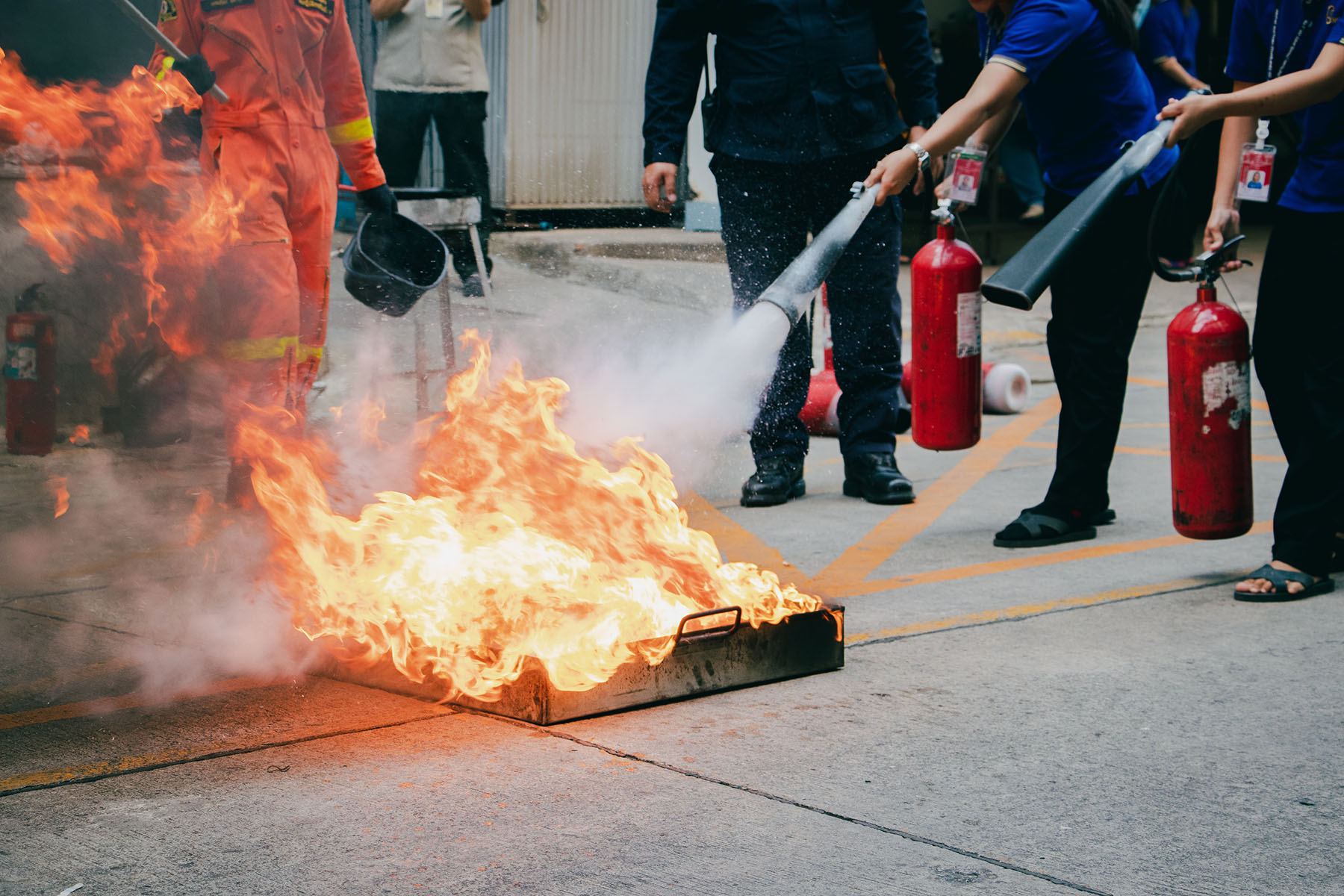
Fire Safety Training
Created by highly experienced fire, health and safety specialists, our Fire Safety Training equips employees with the key knowledge needed to reduce the risk of workplace fires and act safely during an emergency. The course is designed to support compliance with the Regulatory Reform (Fire Safety) Order 2005 (RRFSO) and the Fire Safety (Scotland) Regulations 2006.
Description
Suitable for employees in all industries, the course helps build confidence in identifying fire hazards, understanding legal duties, using firefighting equipment safely, and following correct evacuation procedures.
Training can be delivered online, via a virtual classroom, or in person, giving you the flexibility to select the format that best fits your organisation. Our SCORM‑compliant eLearning course can be easily integrated into your existing LMS or accessed straight away through our online platform.
Benefits of Training
- Helps organisations fulfil their training duties under the Regulatory Reform (Fire Safety) Order 2005 (RRFSO) and the Fire Safety (Scotland) Regulations 2006.
- Enables employees to recognise fire hazards, reduce risks through preventative actions, and respond appropriately in emergency situations, including raising the alarm and evacuating safely.
- Explains the safe use of firefighting equipment, covering fire classifications, choosing the correct extinguisher, and applying the PASS method correctly.
- Designed and delivered by experienced fire safety professionals, ensuring guidance is practical, relevant, and aligned with current best practice.
- IOSH Approved, CPD Certified, and fully SCORM compliant.
- Immediate access to course content upon enrolment.
Course Aims
By the end of the Fire Safety course, participants will be able to:
- Explain how fires can start and develop
- Identify the most common causes of workplace fires
- Understand practical steps they can take to reduce fire risks
- Know how to respond safely if a fire is discovered
- Follow workplace fire evacuation procedures correctly
- Recognise the different types of firefighting equipment available
- Understand which firefighting equipment is suitable for different types of fire
Course Overview
An overview of the most frequent causes of fires, along with the potential impact fires can have on people, property, and business operations. The section also outlines the legal duties and responsibilities of both employers and employees in relation to fire safety.
An explanation of how fires ignite and spread, including the principles of combustion and the fire triangle, as well as the most common causes of fires. Guidance on recognising potential fire hazards within and around a building and taking practical steps to reduce risk. The section also highlights the role of good housekeeping, effective waste management, and safe storage of materials. Learners will explore how heat, fuel and oxygen contribute to workplace fires and how fires can behave and develop in different settings.
Guidance on the correct steps to take if a fire is discovered, including how to activate the fire alarm. What actions to follow when the fire alarm sounds, and how to recognise when it may be safe to attempt to deal with a fire without putting yourself or others at risk.
An overview of the key stages of an evacuation and factors that can slow it down. Guidance on using escape routes correctly and understanding the operation of different types of fire doors. The section explains how internal fire doors help limit the spread of fire and smoke, why lifts must not be used during an evacuation, and how to support people with disabilities safely. Learners will also explore the various escape options available and the essential features that make them effective.
An overview of the different classes of fire and the types of fire extinguishers suitable for each. Guidance on the correct response to an electrical fire, and how to operate a fire extinguisher safely using the PASS technique. The section also introduces a range of portable and fixed fire‑fighting systems, explaining when and how they should be used, alongside practical measures for fire prevention and protection.
FAQS
Can the course be adapted to reflect our organisation’s specific risks?
Yes. We can tailor the training to include scenarios, examples, and risks that are relevant to your organisation. This helps ensure the content reflects real‑world tasks and hazards your employees may encounter.
What support is available if there are any issues with the course?
Comprehensive technical support is provided to ensure a smooth learning experience, whether the course is accessed via our SHINE platform or integrated into your own learning management system (LMS). Our support team is also available to answer queries relating to course content or compliance.
Are discounts available for training larger groups?
Yes. We offer discounted rates for organisations training multiple employees. Contact us to discuss your workforce size and training needs, and we can provide a tailored pricing option.
What happens if a learner does not pass the assessment?
If a participant does not pass on their first attempt, they can revisit the course material and retake the assessment. The training is designed to support learning, with interactive content and knowledge checks throughout.
How quickly can the training be rolled out to staff?
Once purchased, the course can be made available immediately through the SHINE platform or deployed through your existing LMS, allowing employees to start training straight away.
Can learner progress be tracked during the course?
Yes. When using the SHINE platform, you can monitor progress, review completion status, and download certificates to support training records and compliance requirements.


